
In the regions where avocados originally evolved – Central and South America – the main natural pollinators weren’t honey bees, but stingless bees (Meliponini). These native insects co-evolved with avocado flowers and are better adapted to their structure and timing. Unlike the European honey bee, stingless bees are smaller and more agile, allowing them to easily navigate the tight floral cavities of avocado blossoms. In contrast, the larger honey bee often struggles to make effective contact with the reproductive organs of the flower, resulting in lower pollination efficiency. This mismatch between flower and pollinator may help explain why honey bee activity – even when abundant – doesn’t always translate into successful pollination.
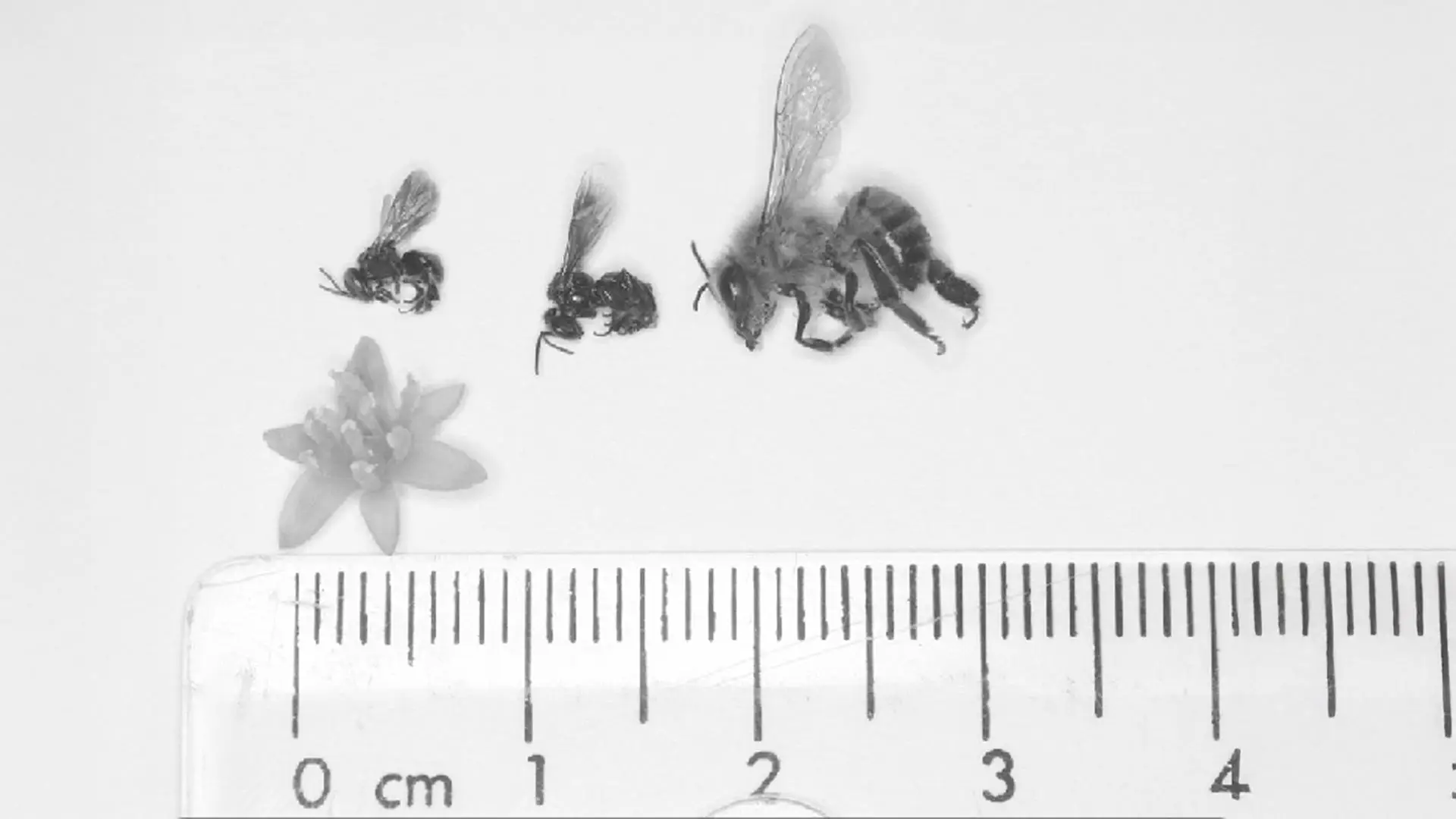
Two types of the stingless bee (left and center) vs. the honey bee (right), shown next to an avocado flower for scale.
Source
Avocado Flowers Aren’t on the Menu
It’s a familiar sight during avocado bloom: hives placed around the orchard, honey bees flying through the air – yet few actually land on the avocado flowers.
Research shows that honey bees often collect much of their pollen from other plants, even when placed inside avocado orchards. The main reason appears to be the nectar composition of avocado flowers, which is less appealing to honey bees.
Their foraging is driven by nectar quality, and avocado flowers offer:
- Low sugar (sucrose) content, providing little energy.
- High potassium levels, which honey bees tend to avoid.
In simple terms, the nectar isn’t rewarding. As a result, honey bee visitation per flower remains low – leading to less effective pollination.
Hass: The Least Popular on the Menu
Among avocado varieties, Hass is particularly low in nectar reward. In orchards with multiple varieties, honey bees often prefer flowers from cultivars like Ettinger or Fuerte, which may offer slightly better nectar or more attractive floral traits. This means that Hass – the dominant commercial variety worldwide – often receives too few visits.
What This Means for Growers
Pollination directly impacts fruit set and yield. If honey bees are not visiting the flowers at the right time, or not moving between trees as needed, the result is poor pollination and reduced yield potential – even in orchards with plenty of hive activity.
Supporting Nature with Technology
As growers look to improve fruit set and reduce their dependence on unpredictable honey bee activity, many growers are exploring complementary approaches to improve pollination. From our experience in the field, applying targeted pollination methods, which simulate the beneficial aspects of natural pollinators, has helped many growers significantly increase yield and ensure more reliable results, even under challenging conditions.