
In many growing regions of Peru, farmers are noticing a subtle but troubling pattern: plenty of flowers, but fruit that arrives late and unevenly. Instead of uniform harvests, crops are showing scattered fruit set and declining yield consistency.
In many cases, the issue isn’t water, nutrition, or pests – it’s pollination. As climate shifts and biological stressors increase, the natural timing that pollination depends on is breaking down.
El Niño Is Disrupting Flower Synchrony Across Crops
For crops that rely on coordination between male and female flower phases – like avocado, flowering synchrony is essential. But recent El Niño cycles have brought hotter days, unexpected rainfall, and humidity spikes to much of Peru’s coastal and highland regions.
In areas like La Libertad and Piura, our observations showed minimal overlap between flowering times of the main (recipient) variety and the pollinizer variety. For pollination, that gap can cause an issue. Without overlap in blooming phases, even an active bee population can’t help.
High Temperatures Are Shortening Bee Activity Windows
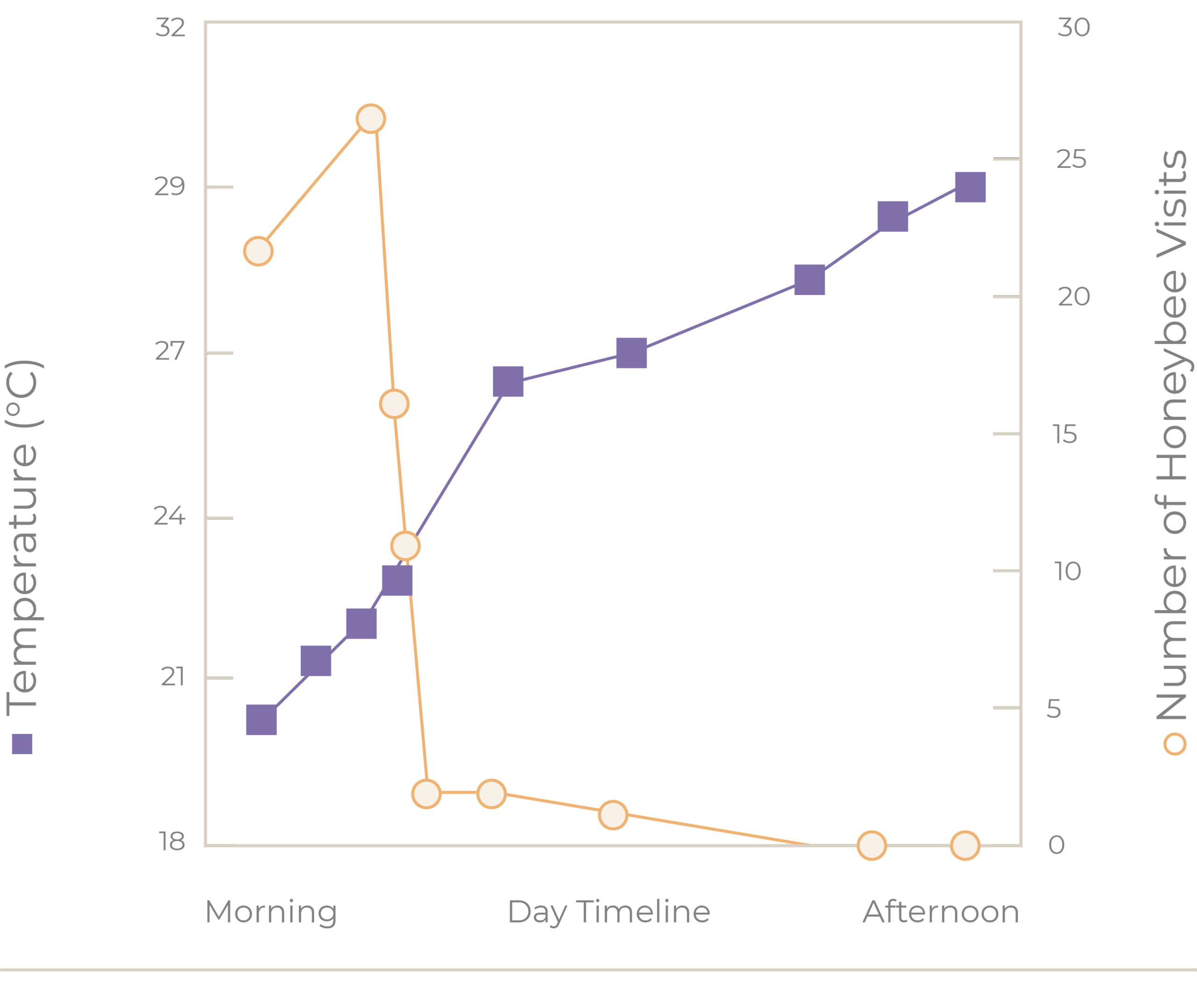
Across many of Peru’s agricultural regions, particularly along the coast and in the Northern valleys, average daytime temperatures have risen noticeably in recent years. During key pollination periods – such as July in avocado orchards – temperatures frequently climb above 34°C by late morning.
In these high temperatures, honey bee foraging drops significantly. This shortened window reduces pollen transfer in crops that depend on precise timing and consistent visitation to achieve a good fruit set.
Source
Biological Stressors Are Weakening Peru’s Bee Populations
Behind the scenes, Peru’s pollinators are under pressure. Beekeepers in multiple regions have reported rising cases of Nosema, a gut parasite that weakens honey bee colonies and reduces foraging efficiency. In some areas, Varroa mites and viral infections are also taking a toll.
Native Pollinators Are Disappearing – And It Matters
Native pollinators like the stingless bee (Meliponini) and solitary species have long played a key role in Peruvian agriculture. But in recent years, their numbers have dropped sharply in many regions.
Habitat loss, pesticides, and climate stress are pushing these species out of key farming areas. Without them, pollination becomes less reliable, especially in crops that honey bees struggle to pollinate effectively.
A Reliable Pollination Partner for Peru
At BloomX, we’ve spent the past five years working alongside growers across Peru – Piura, La Libertad, Chicama and beyond – to confront these pollination challenges in the field. Our precision pollination technology is designed to overcome limitations caused by temperature extremes, pollinator health, and lack of flowering synchrony, ensuring reliable pollination exactly when and where it’s needed.